Why Your Home Doesn’t Feel Right
Why a Home Feels Off
Clients often tell me:
“We don’t spend time here.”
Or:
“It’s not a great space.”
Typically, they are talking about a kitchen, a living room, or a dining room no one enters unless guests are coming. The room may even be beautiful. The furniture may be thoughtfully selected. The finishes may be timeless.
And yet, something feels strangely difficult.
We often assume homes feel “off” because something is wrong: the layout, the lighting, the furniture, the finishes. Sometimes that is true.
As an interior designer, I've learned that a home can look beautiful on paper and still fail to support the people living in it.
But sometimes, what feels off is more difficult to name.
Nothing is pulling us in.
Nothing is asking us to stay.
Off for Whom?
We inherit ideas about what rooms should be.
Dining rooms should look elegant. Living rooms should be arranged a certain way. Bathrooms, somehow, are expected to disappear politely into the background.
But life is more complicated than that.
The most meaningful residential interior design projects rarely begin with furniture or finishes. They begin with understanding how people want to feel in their homes.
The same person may want completely different experiences throughout the home: a bedroom that feels calm and restorative, a living room that feels energetic and alive, a kitchen that slows the nervous system, or a bathroom absurd enough to make someone smile every single time they walk in.
And honestly, why not?
The most meaningful interior design is rarely about creating a home that impresses others. What delights us is deeply personal, not only from person to person, but from room to room.
The problem is not that our preferences for home are personal. The problem is that many of us inherit ideas about what home should feel like without ever stopping to ask whether those ideas actually belong to us.
Perhaps the question is not:
Is this room beautiful?
But:
Does this room feel true?
A Glorious Room. But Forgotten.
Years ago, I walked into a dining room I still think about.
The home was magnificent. Antiques lined the space. Replicas of famous paintings hung carefully on the walls. Beautiful wallpaper. Silk curtains. Every detail thoughtfully assembled.
It was objectively beautiful.
And yet, no one used the room.
Ever.
The antiques, instead of bringing life, felt strangely suspended, as though the room had been preserved rather than lived in. The energy felt stale.
I remember feeling unexpectedly sad walking into it. Not because the room lacked beauty. But because it seemed disconnected from the people living around it.
This is not an argument against antiques, formality, or elegance. For another family, candlelit dinners beneath inherited paintings might feel deeply alive. A formal dining room might become the center of family ritual.
The problem was not the room itself.
Too formal.
Too emotionally cold.
A glorious room.
But forgotten.
It had been designed for an idea of living rather than the reality of how the family actually lived.
Sometimes a room feels off not because something is wrong with it, but because it is no longer offering the experience people actually want to have there.
What a Home Offers
I believe every space offers an experience.
The question is whether it is one we actually want.
A framed view where two squirrels pause long enough for children to wonder why they are “playing” that way while the adults decide with a smile that this is not the moment for an explanation.
A room where the rhythm of cicadas singing is so loud and clear that their heartbeat-like sound invites sitting in stillness.
The discovery, years later, that an old banister has tiny engravings you somehow never noticed before.
The chair everyone ends up wanting because it’s at the best spot.
A room that feels equally good alone and with others.
A place where meals stretch longer than expected. Where cleaning up somehow doesn’t feel annoying.
Where life unfolds more fully.
The most thoughtful interior design is not simply about creating beautiful rooms. It is about creating opportunities for connection, curiosity, comfort, delight, and wonder.
In one home I loved deeply, sunrise became part of daily life.
Every morning brought awe.
Not occasionally.
Daily.
To feel awe, even once a day, is a gift beyond anything I imagined a home could offer.
Moments like these are easy to overlook when talking about home design. Yet they often become the memories people treasure most.
And perhaps that is part of the point: homes shape us more than we realize. Not because they are perfect, but because they quietly influence what becomes possible.
Curiosity.
Gathering.
Stillness.
Laughter.
Play.
Awe.
Or the absence of those things.
Every home offers something. The question is whether what it offers feels aligned with the life we want to live.
Perhaps that is the better question to ask when a home feels off.
Not:
What is wrong here?
But:
What experience is this home offering me?
And:
Is it one I truly want?
How a Home Changed the Way We Live | The Whistling Well
A mid-century home above the Hudson River became more than a renovation. It reshaped the rhythm of family life and revealed a truth that would later become the foundation of The Whistling Well: how we live is shaped by the spaces we inhabit.
We were not simply looking for more space. We were searching for a different way to live one shaped by light, landscape, and wonder.
Little did we know that a house on the Hudson River would reshape our family's daily life and would become a lived foundation for an interior design and architecture studio. It would ground the belief that space shapes how we live.
The Life We Were Living
Raising two young children in New York City felt relentless. I hurried my kids, chasing time. Riding the subway to and from work was my sacred time alone. My partner and I saw each other rarely, and the longing for a pause grew. A vacation would exhaust us. We didn't need more external stimulation. We desired unhurried togetherness.
On a beautiful Sunday morning at the Prospect Park playground, I swung our toddler while my husband kept an eye on our crawling baby. Perhaps it was the shift in weather, the cool October breeze, that stirred something in us. We started dreaming out loud about a different way.
With openness, unlike how we had connected in a while, we each imagined a life in all of its sensations. As though building with blocks, we took turns offering one image, then another, slowly constructing the life we longed for. Like many before us, we had decided to find a weekend cottage upstate, no more than an hour away from Brooklyn, abundant with trees, birds, and animals. We would stay there Friday evening to Sunday evening to recalibrate our senses, so we could be together and be present without hurrying anywhere.
Looking back, what we were really searching for was intentional living. A life at home designed around presence, not productivity.
The House on the Mountainside
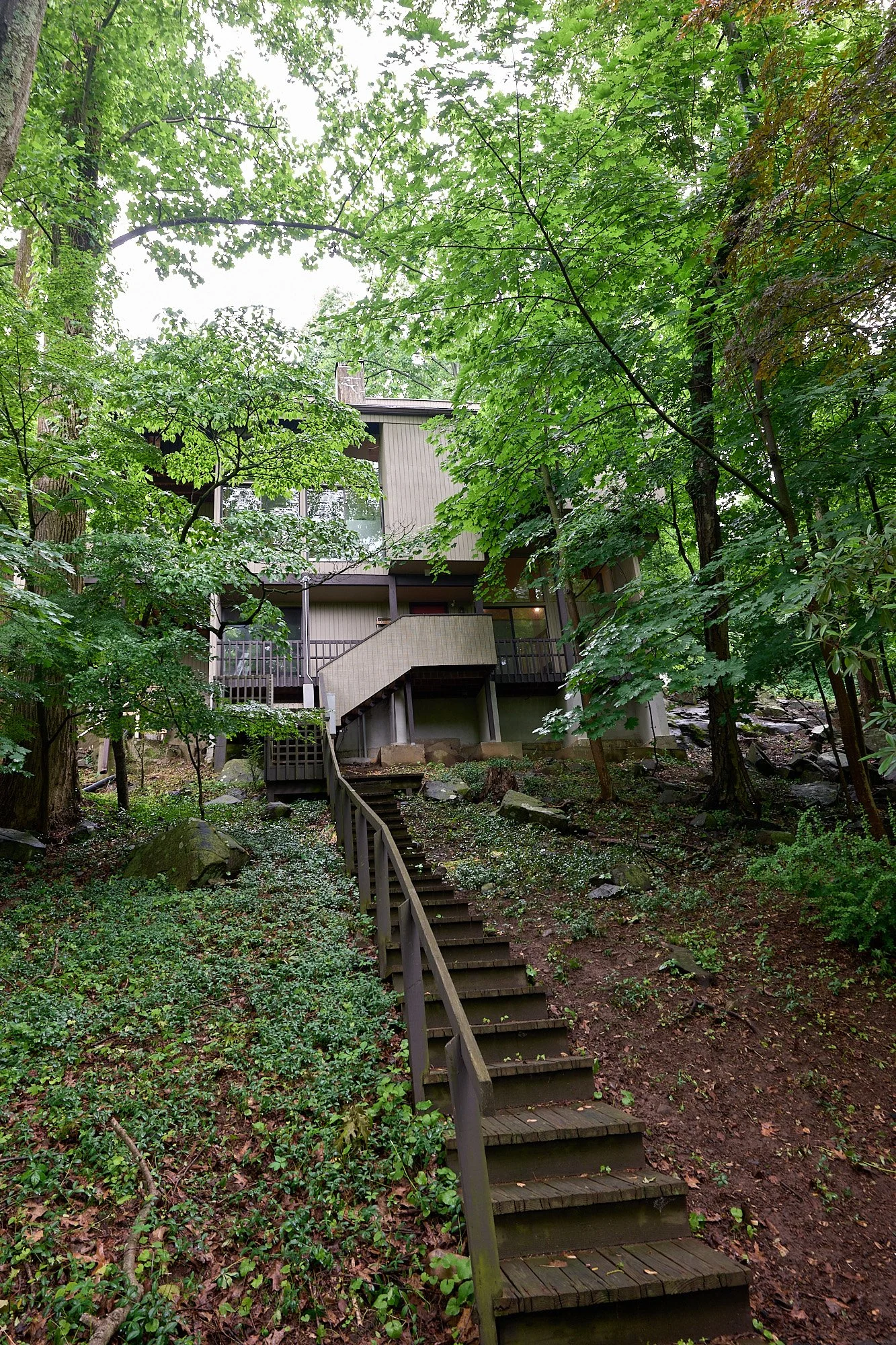
The search began that night. By the next weekend, we had appointments to see three properties. The first property, though interesting in design, had a layout that was disorienting. The next property, the realtor warned, had a very steep driveway and had been on the market for almost a year without offers. We turned in, only to drive up half a mountain. Steep was not the word to describe it.
As we parked on the lot behind the house, the Hudson River greeted us. In its beauty and vastness, I suddenly understood why someone might name a child Hudson. The strange thought faded. My senses were activated. I felt alive standing among trees–at some of their roots, yet others’ canopies. The river view was accompanied by bird songs and insects chirping. Rocks around us spanned between trees and as I placed my hand on one, I breathed in deeply. The air was crisp with a taste of dew.
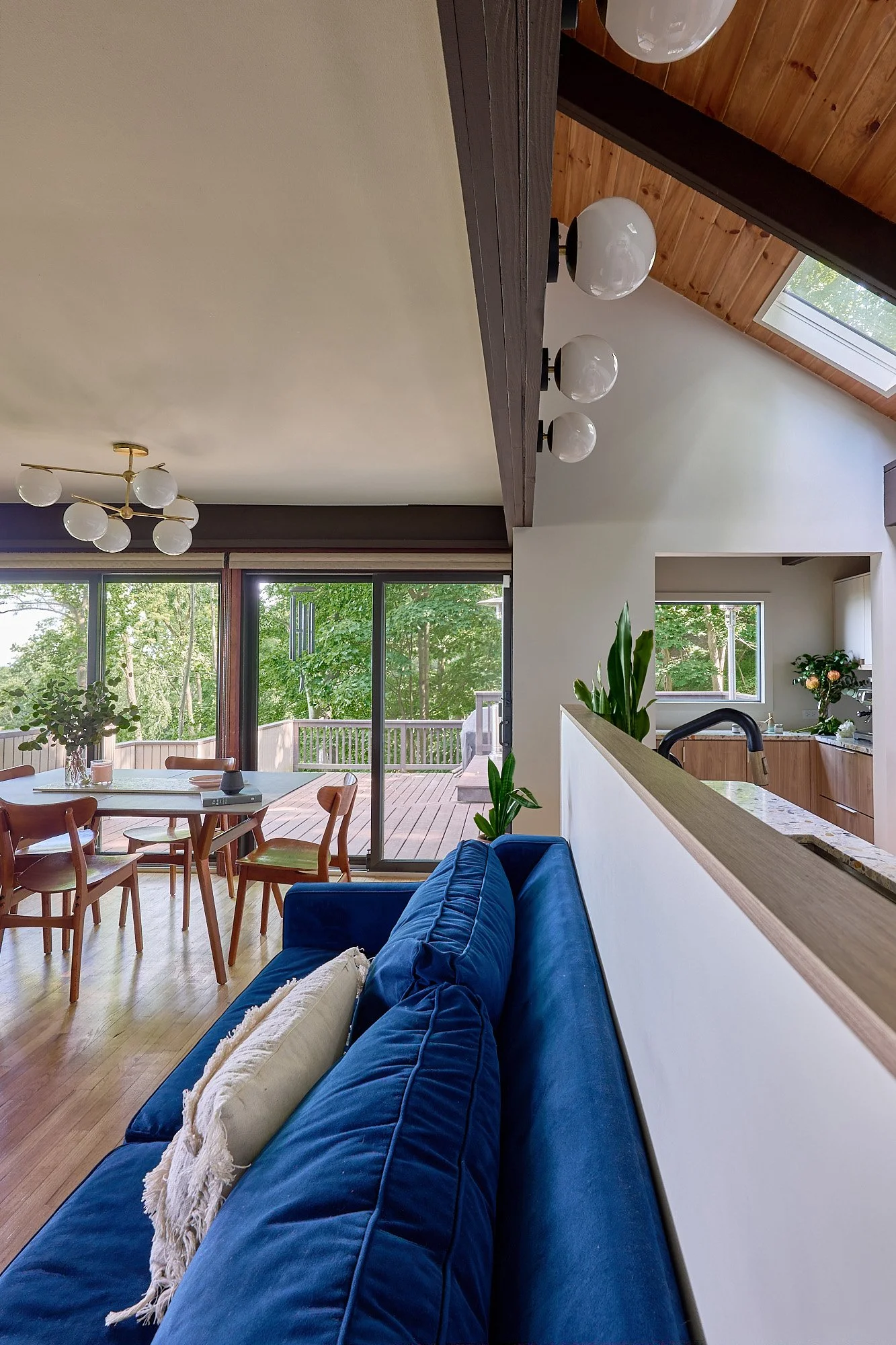
Perched comfortably on that mountainside sat the house. This side offered only a door and no windows. Curious, I handed our baby to my partner and walked in for a quick exploration. I was standing in the living room and kitchen area, overcome. All of the windows–I had found them. Expansive was the glass and immersive was my belonging. I was a bird in a nest up on the trees. Yet a human, protected from the elements. My brain fired and I felt everything. I looked at Ken and mouthed, this is it.
To be clear, this house was not the Banks’ pristine mansion from The Fresh Prince of Bel-Air. Its condition resembled that of the house from My Neighbor Totoro. It also carried a similar kind of magic.
The house was a striking example of residential architecture designed to be fully integrated into its landscape. It sits on the mountain’s rock and grows vertically through six split levels. Taking advantage of the height, the original architect, Charles Winter, sculpted the interior within the outer shell to achieve three-story heights, as well as continuous horizontal glass openings in reverence of the river. He carved space for different small experiences, with the largest being the 600 sf Grand Room, an open layout encompassing living, play, dining, and kitchen that allowed daily life to unfold in one connected space.This layout allowed for the house to curate the togetherness we were seeking while being continuously immersed in the nature for which we longed.
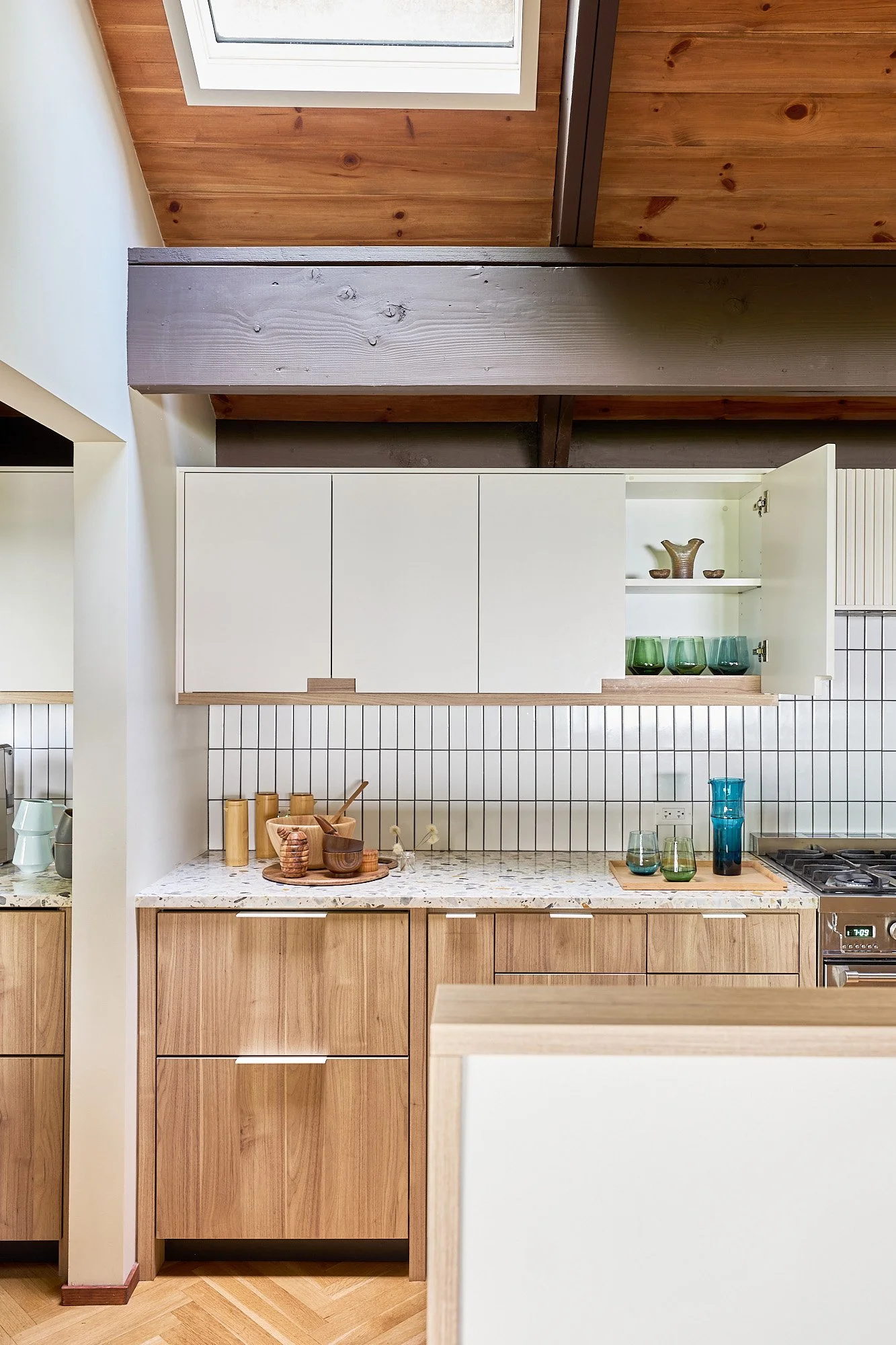
Constructed of wood post and beam, the finished building material included wood ceilings, painted drywall, and wood floors. On the exterior, painted plywood siding sheathed the home. The house’s structure was expressed inside and out. Yet beneath its strong architectural bones and strategic design, the home had grown outdated, felt dormant and stale, with portions of the structure beginning to rot. Inside, the bathrooms’ 1970s melamine peeled, the kitchen’s dark burgundy painted plywood cabinets carried odors, water damage stained wood ceilings, and some of the floors were open to the level below without guardrails. The lighting and electrical systems had to be redesigned and rewired. On the exterior, large areas of damaged siding needed replacing, along with a leaking roof, and a number of columns and beams.
This was no small cottage upstate, and no small project to renovate. The house, however, offered a life we could live nowhere else. It also called for love and care, ready to awaken. After purchasing the property, it underwent a phased home renovation over four year: part structural restoration, part intentional redesign of how the home could support our family's daily life.
A Home That Changed Our Rhythm
For the first year, we spent our weekends at The Treehouse, and after the pandemic, we moved there for good. Every single morning, the piercing sunrises took our breath away. Each sunrise brought a new color palette, and together with our children, we watched in awe as the Hudson River seemed to become a different landscape each day. One morning, our oldest daughter rushed in to tell us, “You have to see! The sky is on fire!” She was not scared, but excited, knowing by now the dramatic ways of our neighbor, the sun.
In the Grand Room, our life narrative unfolded. We shared meals, quiet moments with hot chocolate by the fireplace, talked, and laughed, all in the presence of the forest, the animals, and the endless sky. While we cooked and cleaned, the kids would play on the room’s platform that hovered in front of the trees. The horizontal sightlines framed through the architecture and landscape calmed us. The exterior layered decks were extensions of our living space. Life blurred between outside and in, amid children and dogs. Eyes wide open and breathing deeply, we learned to observe, to look both close and far. The ever-changing views of the river and trees became a living backdrop to daily life, marking the passage of seasons and slowing the pace of the day. Fire crackled during chilly evenings and mornings, and we listened, discussing the visual texture each sound seemed to carry.
In restoring the home, we discovered something unexpected: the house was quietly redesigning us in return. The architecture was shaping our moods, our connection to each other, and the rhythm of every day. We learned to be more present with each other and in the world. We learned to share in each other’s awe and wonder. What started as a home remodel became a reorientation of how we live, gather, connect, rest, and work.
What the House Taught Me About Design
It was in that house that I decided to leave my corporate work and start my design studio, The Whistling Well. My lived experience there conditioned me to claim the truth I had discovered: interior design and architecture are first and foremost about people about how we rest, gather, connect, and live within the spaces we call home. And so, The Whistling Well emerged an interior design and architecture studio grounded in one core belief:
How we live is shaped by the spaces we inhabit.
In the reflections that follow, I'll be sharing more about how space shapes the way we rest, gather, and live — and how thoughtful design can make that possible for any home.
Continue the conversation. Join The Sketchbook.
Written by Milena Bica-Shibata
Founder, The Whistling Well